
Parasitic Effects in a LC Filter
Ideal vs. Real Components and Measurement Validation1 Introduction
This report looks at how an LC filter behaves in real life, focusing on the effects of parasitic elements in components. Simulations and measurements are compared to show how real components differ from ideal ones. The study highlights how these parasitic effects change the filter’s performance.
An important part of understanding real components is the self-resonant frequency (SRF). SRF is the point where a component stops behaving ideally: a capacitor begins to act inductive, and an inductor begins to act capacitive. This change strongly affects the frequency response of any filter that uses these components and is a key factor when comparing ideal and real behavior.
1.1 Used Equipment
For the measurements, a LibreVNA vector network analyzer was used (Figure 1). LibreVNA is a small and affordable two-port VNA capable of measuring S-parameters over a wide frequency range, which makes it suitable for testing components such as capacitors, inductors, and passive filters.
A NanoVNA testboard (Figure 2) was also used for mounting the components. The components were soldered directly onto the testboard to ensure stable connections and to accurately measure their characteristics. This setup allowed reliable and repeatable measurements, especially important when observing high-frequency behavior.
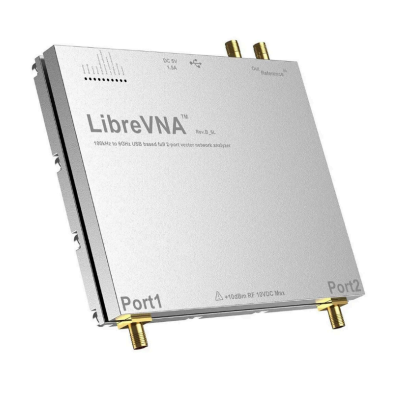
Figure 1 – Vector Network Analyzer – LibreVNA
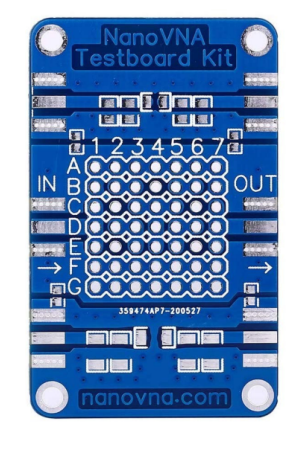
Figure 2 – NanoVNA Testboard
Using the LibreVNA software, the S-parameters of each component were recorded.
In a two-port network S11 represents the reflection at the input, S22 represents the reflection at the output, S12 is the reverse transmission and S21 is the forward transmission.
For measuring capacitors, inductors, and the LC filter, the main parameter of interest was S21, because it shows how much signal passes through the device and reflects the frequency-dependent impedance or insertion loss.
2 Measurement of Individual Components (L and C)
In this part, the impedance characteristics of the 2200 pF (Würth 7440320056) capacitor and the 5.6 µH (Würth 8853522130151) inductor were examined. First, the datasheet curves were reviewed, and then the components were measured using the LibreVNA to verify their real behavior. The measurements confirmed the expected self-resonant frequencies (SRF) for both components, which is important because above the SRF a component no longer behaves ideally.
Additionally, both components were modeled in LTspice using their datasheet parameters and the extracted parasitic values, and their impedance was simulated to compare the ideal and real-frequency responses.
2.1 Impedance Behavior of a Capacitor
The impedance of the 2200 pF capacitor was observed across frequency. From the datasheet curve (Figure 3), the SRF is visible as the point where the impedance reaches its minimum. Below SRF, the capacitor behaves normally as a capacitor (impedance decreases with frequency). Above SRF, the parasitic inductance starts to dominate and the capacitor behaves like an inductor.
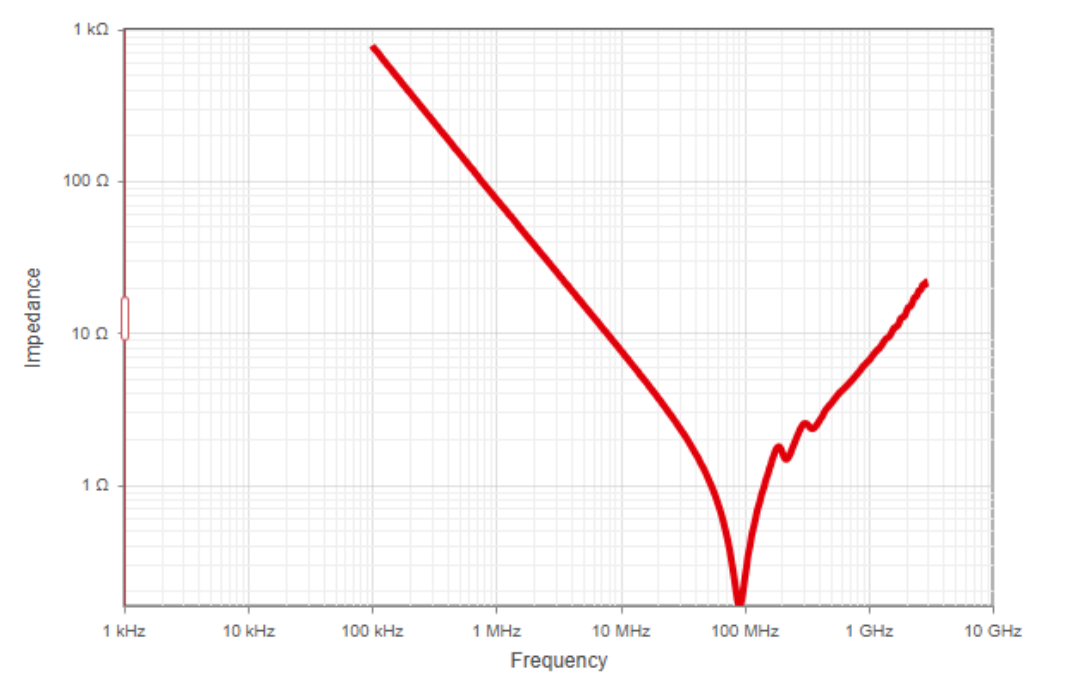
Figure 3 – Datasheet impedance curve of 2200 pF capacitor
The LibreVNA measurement (Figure 4) showed a self-resonant frequency of approximately 90.2 MHz, which matches the datasheet curve well. The main difficulty during measurement was instability around the SRF point. This happened because the impedance is extremely low at resonance, making the measurement sensitive to external interference.
Possible sources of these disturbances include:
- stray electromagnetic fields from nearby electronics,
- poor grounding or loose connections on the testboard,
- cable movement causing small changes in the measurement plane,
- coupling to the environment due to the very small impedance at resonance.
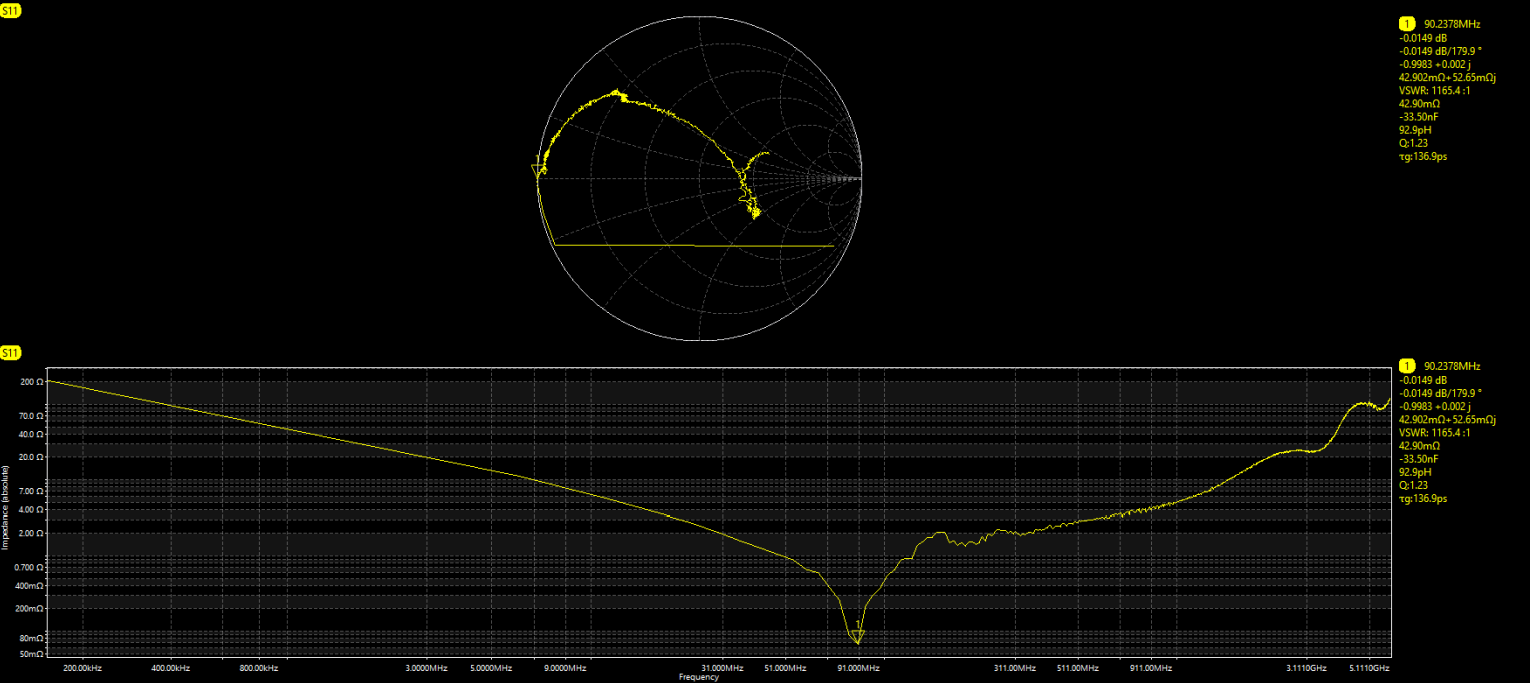
Figure 4 – LibreVNA measurement of 2200 pF capacitor (S21)
For the 2200 pF capacitor, the series resistance from the datasheet curve, 0.164 Ω, was included in the LTspice model. The datasheet impedance curve shows that the capacitor behaves capacitively up to its self-resonant frequency (SRF), after which the impedance increases due to the parasitic series inductance. LibreVNA measurements confirmed this behavior, with an SRF of approximately 90.2 MHz. Around this frequency, measurements were somewhat unstable because the impedance is very low and sensitive to small external disturbances. Likely causes include the testboard connections, coaxial cables, insufficient grounding, and ambient electromagnetic noise.
The parasitic series inductance (ESL) was calculated using the SRF formula:

For C = 2200 pF and f = 90.2 MHz, the calculated series inductance is approximately 1.42 nH.
For simulation, two LTspice models were created. The ideal model contains only the nominal 2200 pF capacitance, ignoring parasitic effects (Figure 5a). The real model includes parasitic series inductance and series resistance derived from the datasheet and SRF (Figure 5b). This model reproduces the measured frequency-dependent impedance and matches the trends observed in the LibreVNA measurement.
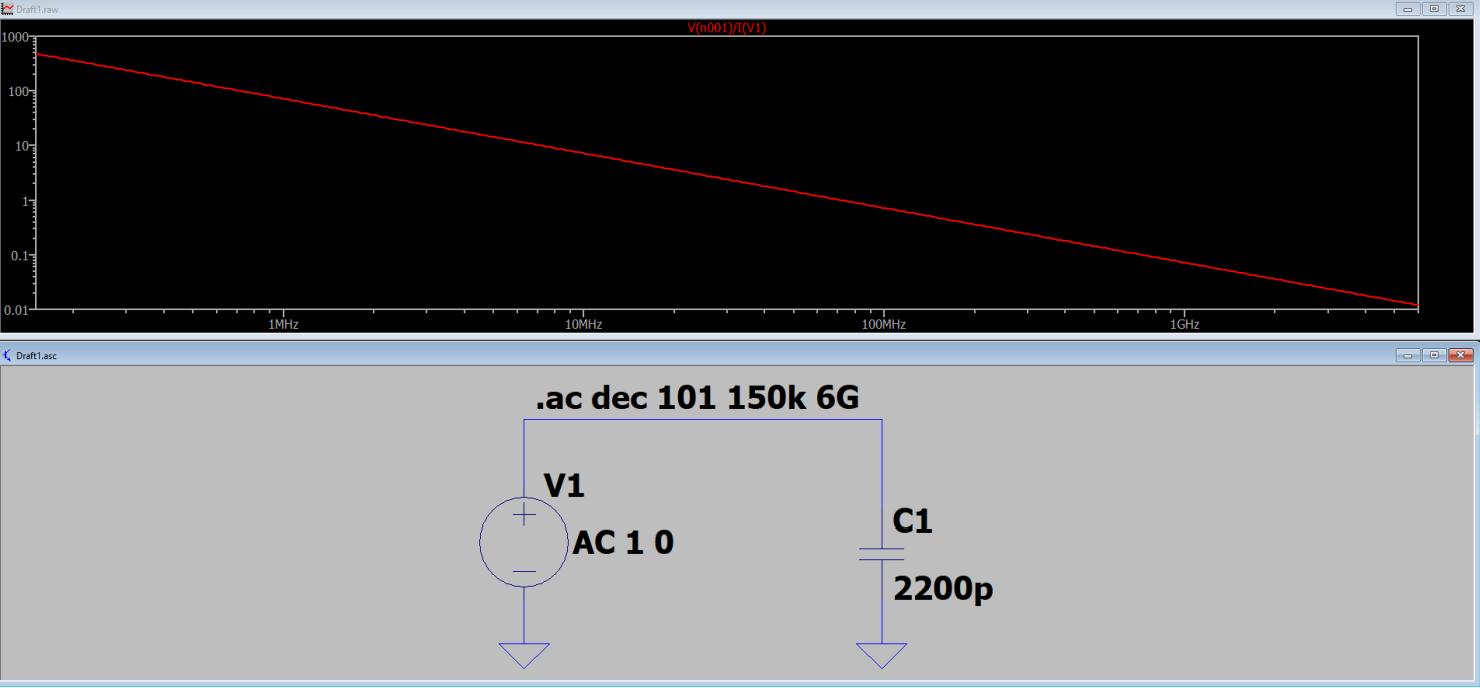
Figure 5a – LTspice simulation of the ideal 2200 pF capacitor
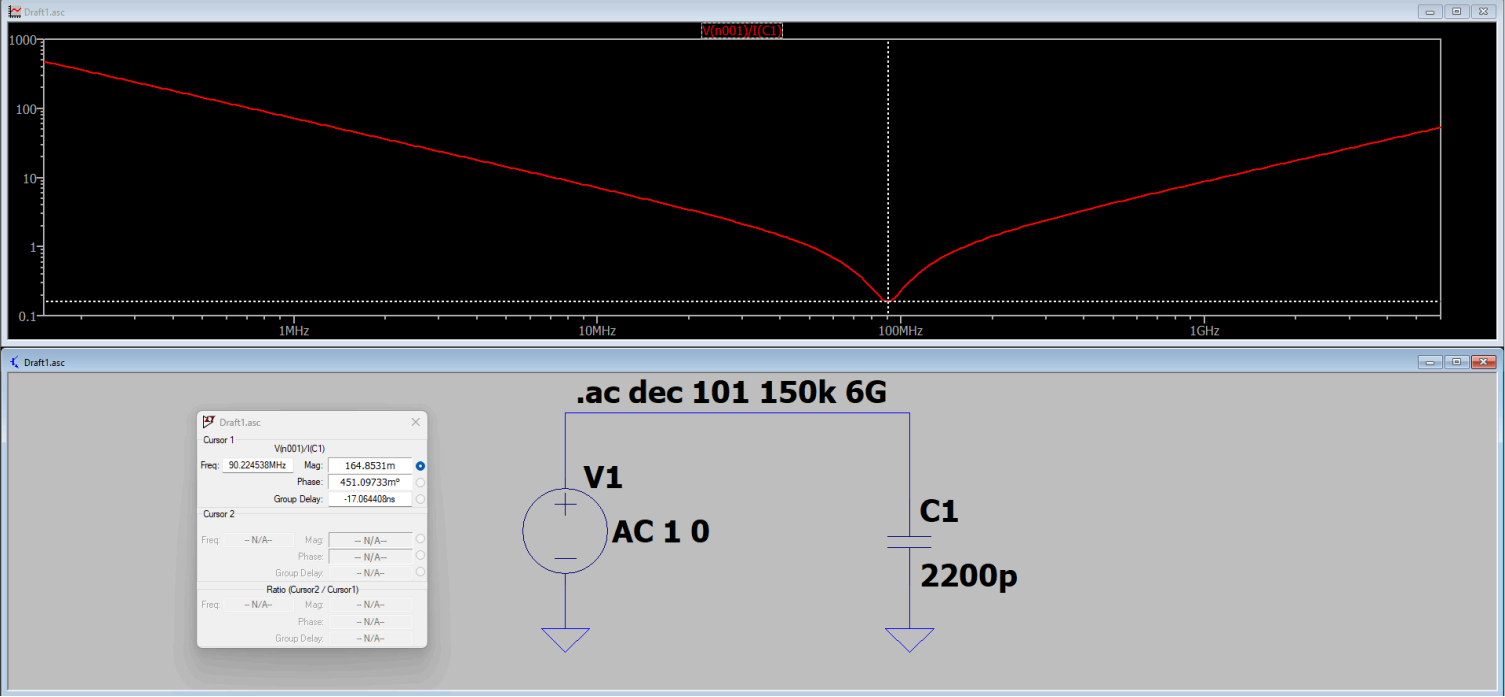
Figure 5b – LTspice simulation of the real 2200 pF capacitor, including parasitic effects
2.2 Impedance Behavior of an Inductor
The impedance of the 5.6 µH inductor was also examined across frequency. From the datasheet curve (Figure 6), the SRF appears at the frequency where the impedance curve reaches a maximum. Below this frequency, the component behaves as an inductor, while above SRF it begins to act like a capacitor due to its parasitic capacitance.
Based on the measured results (see Table 1), the output current ripple remained within 20–40% of the load current, in accordance with the recommended range from Texas Instruments [https://www.ti.com/lit/an/slva477b/slva477b.pdf].
Although the TPS62160 datasheet does not specify exact limits for output current ripple, the output voltage ripple can be referenced from Figure 22 of the datasheet. Figure 6 shows a diagram of the measured output voltage ripple in relation to input voltage and output current. This allows for direct comparison with the datasheet specifications, highlighting how ripple varies under different operating conditions.
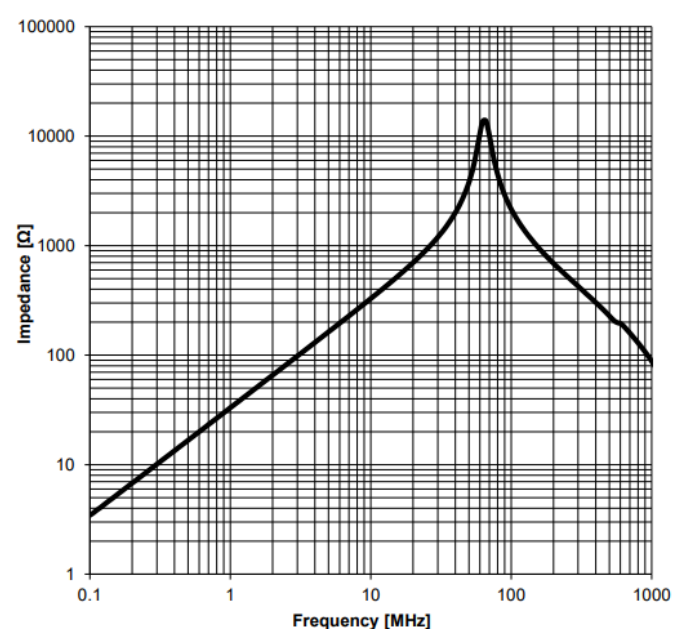
Figure 6 – Datasheet impedance curve of 5.6 µH inductor
LibreVNA measurements (Figure 7) showed a self-resonant frequency of about 60.2 MHz, which again aligns well with the datasheet. Just like with the capacitor, some instability was noticed around the resonance peak. This is because the impedance rapidly changes near SRF, and even very small external effects can disturb the reading.
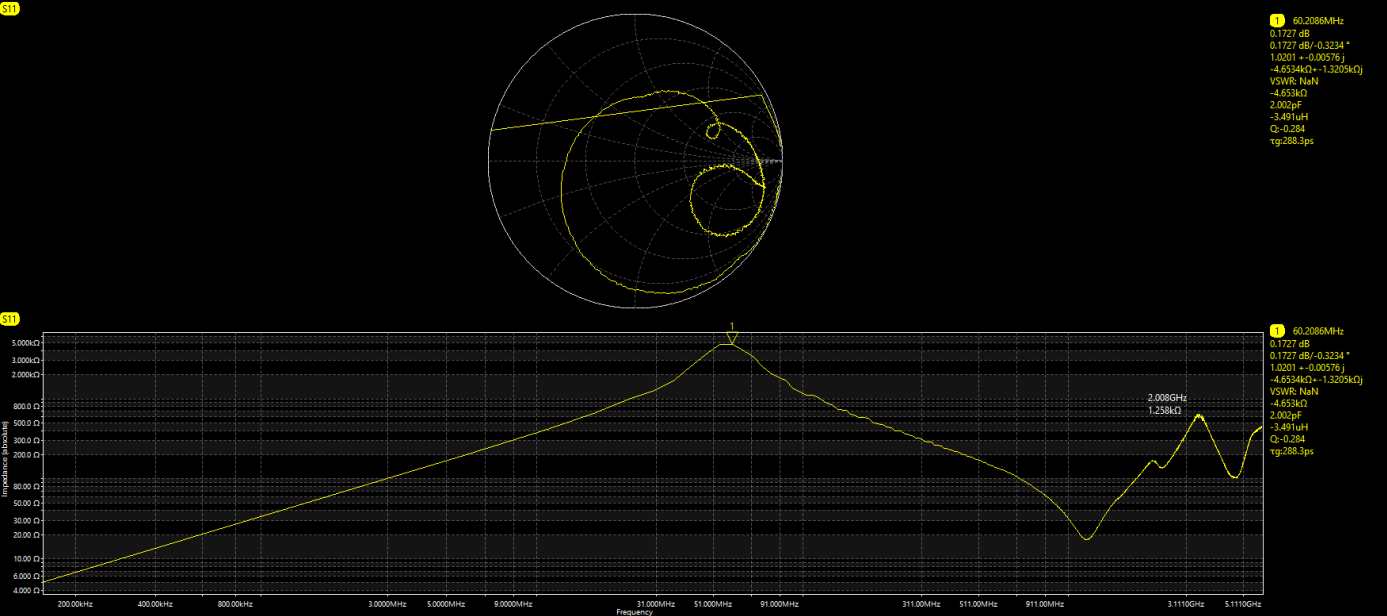
Figure 7 – LibreVNA measurement of 5.6 µH inductor (S21)
Using the SRF value and the known inductance, the parasitic capacitance of the inductor was calculated:

For L = 5.6 µH and SRF = 60.2 MHz, parasitic capacitance is 1.2494 pF.
Two LTspice models were created for the inductor. The ideal model contains only the nominal 5.6 µH inductance (Figure 8a). The real model uses the datasheet series resistance and the parasitic parallel capacitance calculated from the datasheet SRF, reproducing the frequency-dependent impedance observed in the measurements (Figure 8b).
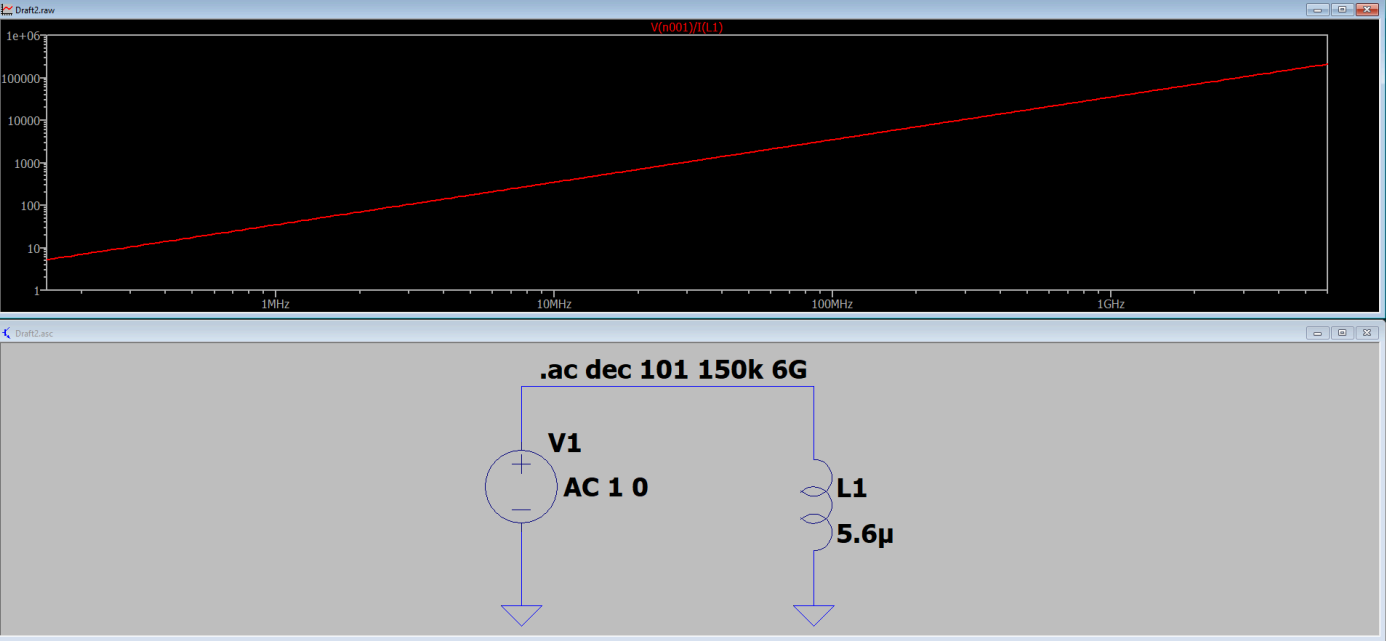
Figure 8a – LTspice simulation of the ideal 5.6 µH inductor
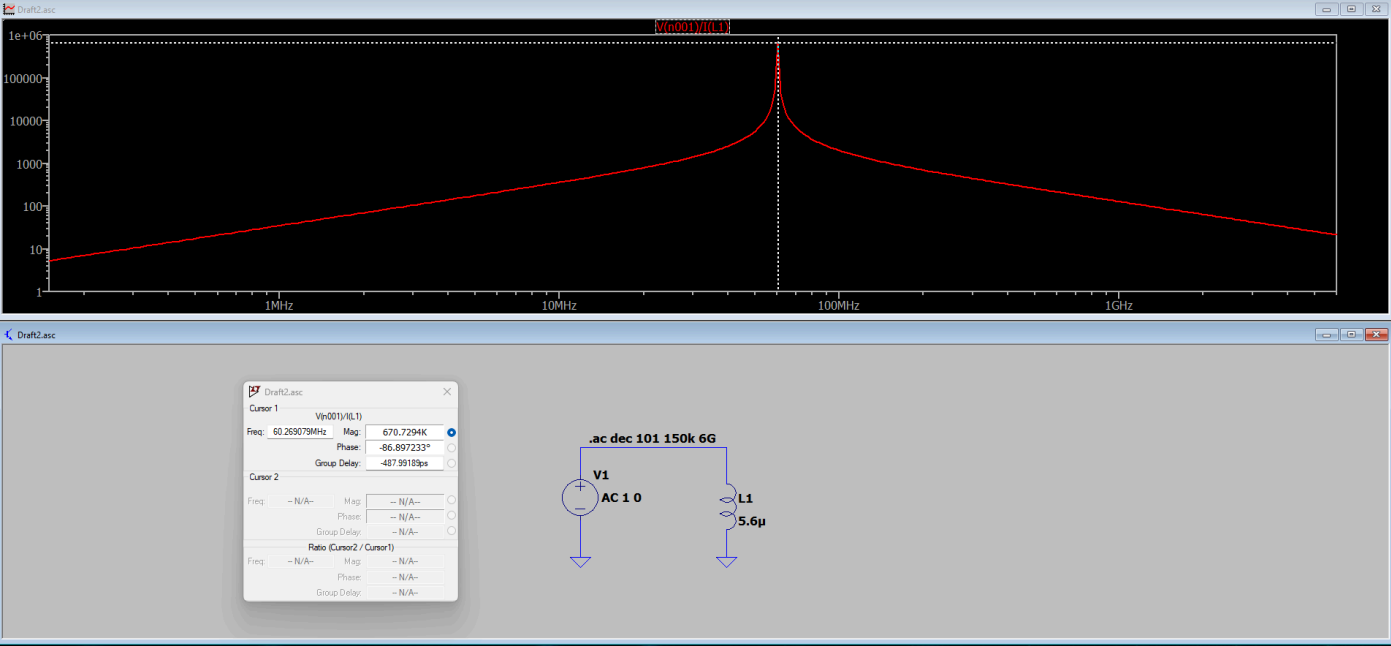
Figure 8b – LTspice simulation of the real 5.6 µH inductor, including parasitic effects
3. LC Filter Design (Ideal Case)
The LC low-pass filter was designed in a series-parallel configuration, with a series inductor and a parallel capacitor. The target design frequency was 2 MHz.
The design was performed using an online tool, which initially suggested values of 5.627 µH for the inductor and 2.251 nF for the capacitor. For practical implementation, these values were rounded to the nearest standard commercial values, 5.6 µH and 2200 pF.
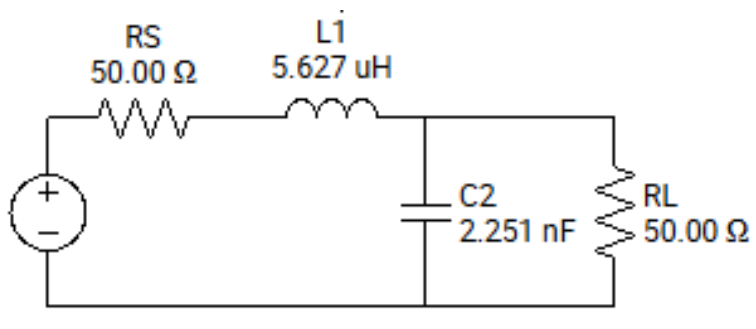
Figure 9 – Schematic of the LC low-pass filter from the online design tool
The schematic from the design tool is shown in Figure 9, illustrating the ideal LC configuration. The ideal filter was simulated in LTspice (Figure 10), which confirmed a cutoff frequency around 2 MHz. The simulation frequency range was set up to 6 GHz to observe the behavior over a wide spectrum. In this ideal case, the capacitor attenuates all frequencies above the cutoff perfectly, showing the expected low-pass filter behavior.
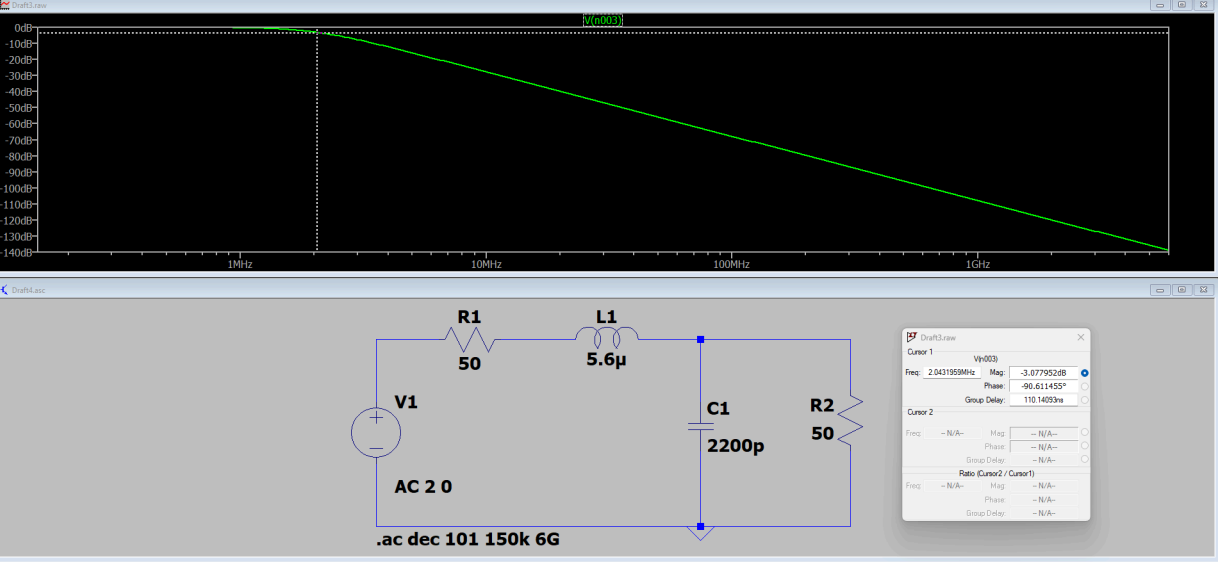
Figure 10 – LTspice simulation of the ideal LC filter, showing a cutoff around 2 MHz
4 LC Filter Design (Real Case)
After modeling the LC filter with real parasitic elements (from datasheets and measurements), the LTspice simulation showed that the –3 dB cutoff remained close to the design value. However, a clear change in behavior appears after the inductor’s self-resonant frequency (60.2 MHz).
As shown in Figure 11, above this point the filter no longer attenuates the signal. Instead, the response rises and exhibits gain-like behavior, meaning the filter stops acting as a low-pass. This effect is caused by the parasitic inductance of the capacitor and the parasitic capacitance of the inductor, which induce resonance at high frequencies.
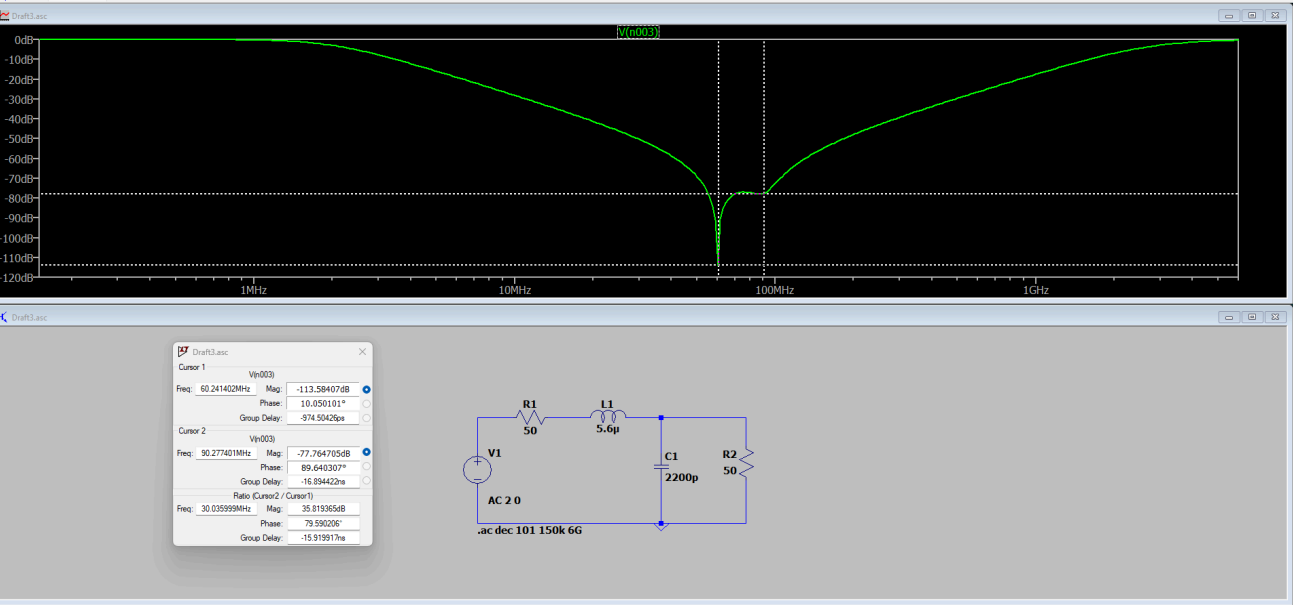
Figure 11 – LTspice simulation of the real LC filter, showing loss of filtering and resonance above ~60 MHz
The filter was measured using the LibreVNA with the components soldered on the NanoVNA testboard. Two measurement views were captured for clarity:
- Figure 12 shows the S21 response around the –3 dB cutoff frequency, highlighting the intended low-pass performance.
- Figure 13 shows the S21 response over a smaller frequency range, clearly illustrating where the filter ceases to behave as a low-pass and exhibits resonance and gain-like behavior.
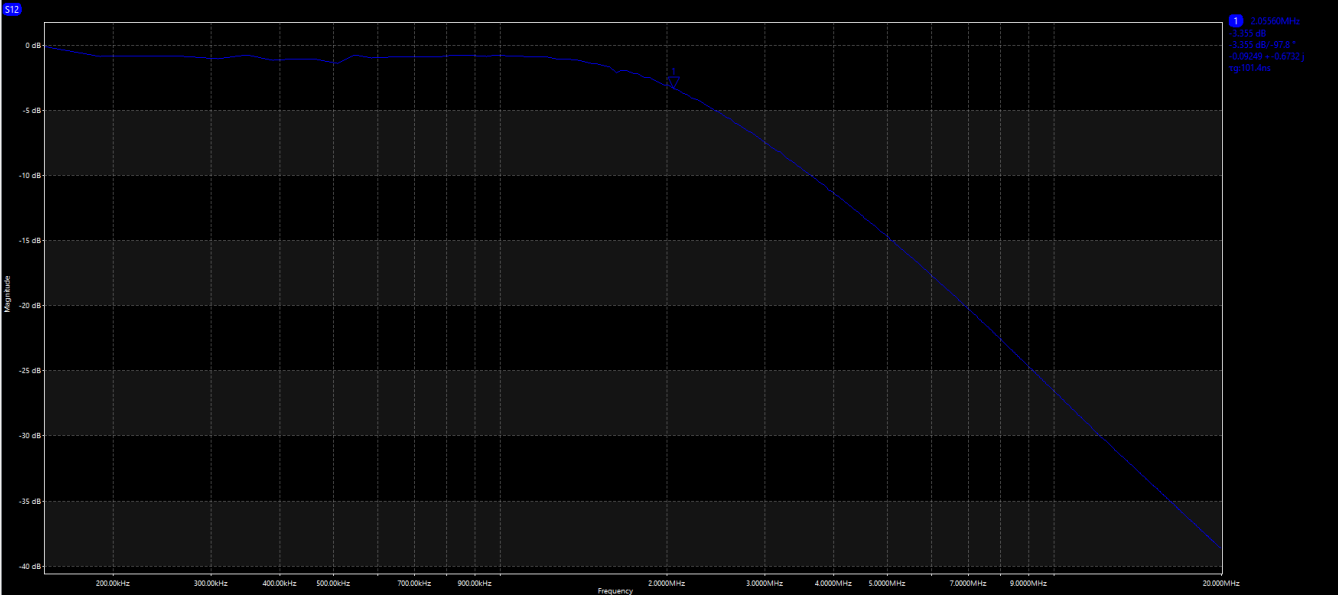
Figure 12 – LibreVNA S21 measurement of the real LC filter around the –3 dB cutoff frequency
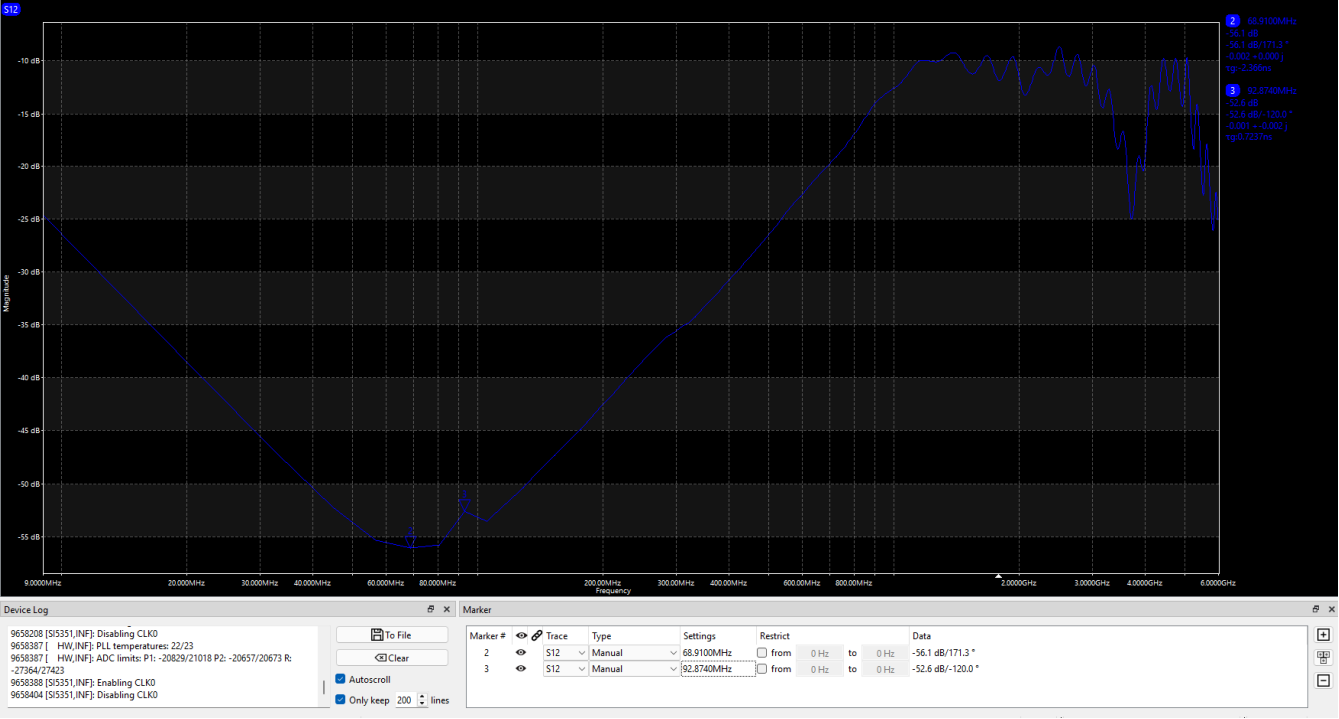
Figure 13 – LibreVNA S21 measurement of the real LC filter over a smaller frequency range, showing where it stops acting as a low-pass
Although the LTspice simulation and LibreVNA measurement trends are similar: both show the expected cutoff near 2 MHz and the high-frequency resonance starting around 60 MHz.
5 Conclusion
Ideal second-order LC low-pass filters behave as expected near their design frequency. However, parasitic effects in real components, such as series resistance, series inductance in capacitors, and parallel capacitance in inductors, cause resonances and gain-like behavior at higher frequencies.
As a result, second-order filters cannot maintain low-pass behavior over very wide frequency ranges. Both LTspice simulations and LibreVNA measurements confirmed that above ~60 MHz, the filter stops attenuating signals and exhibits resonance. Designers must consider these parasitic effects when implementing filters in practical circuits.

Emina Imširović
Junior Electronic Engineer
A Junior Electronic Engineer with hands-on experience in the complete hardware development lifecycle, from schematic and PCB design to circuit testing and assembly. She is experienced at antenna adjustments and independently researching and implementing practical electronic solutions to meet project needs

S